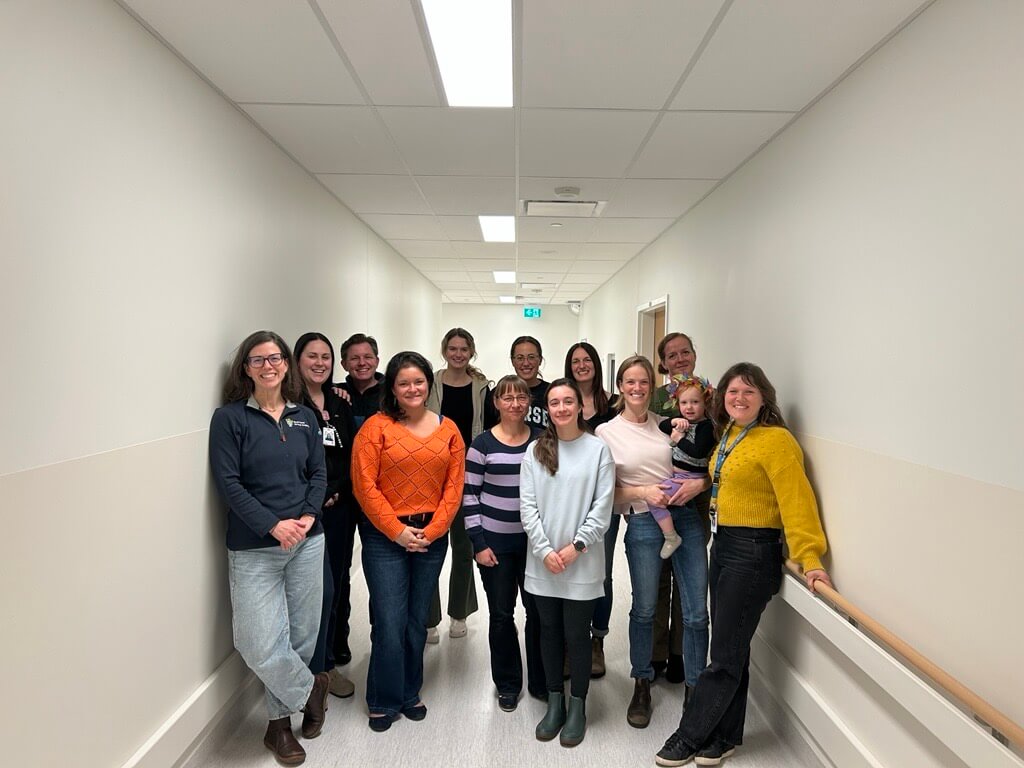
General Rural Internal Medicine (GRIM) connects rurally minded general internal medicine physicians across BC. Co-led by Dr. Ian Warbrick and Dr. Denise Jaworsky, the network supports mentorship, peer connection and practical work on rural internal medicine needs, including workforce planning, locum coordination and critical skills training.
GRIM responds to a clear gap: rural communities need better access to specialist care, and rural internists need stronger systems of support.
“Attending the Rocky Mountain Internal Medicine Conference in Canmore not only provided educational and stimulating medicine presentations, but also supported connecting with other rural physicians, including those from rural BC. Meeting in person and discussing rural GIM topics is foundational to supporting each other in our work and providing ongoing excellent care to patients in these regions. These collegial relationships are important to foster.”
Explore the numbers
12 residents
Twelve residents attended a rural internal medicine interest night.
5 internists
Five rural internists from five communities connected at the Rocky Mountain Internal Medicine Conference.
2 peer-reviewed publications
Two GRIM-related peer-reviewed publications were listed by the project team, along with two conference abstracts.
1 Presentation
One conference presentation highlighted challenges in rural specialist care.
“One thing that makes rural GIM practice challenging and isolating is the lack of a community of practice. RMIM was an efficient, high yield way to bring together rural GIM physicians in a setting that supports CME and also enabled us to build connections with other rural GIM physicians.”
Making a Difference
Participants described GRIM as one of the first formal structures in BC focused specifically on rural general internal medicine. In 2025, the network helped rural internists connect, share knowledge and make rural internal medicine more visible to residents and partners.
By supporting mentorship, peer connection, research and early work on locum sharing, GRIM is helping create the conditions for more stable and connected internal medicine support in rural communities where access to specialists remains uneven.
Plans for the Future
In 2026, GRIM will continue strengthening connections between rural internists, residents and partners across BC. Priorities include:
Networking and faculty development
- Explore opportunities for a rural internal medicine training course in partnership with RCME and POCUS.
- Attend the Rocky Mountain Internal Medicine Conference again, host another networking session and, pending funding, support registration for a small group of rural physicians and residents.
- Explore a bimonthly or quarterly “Challenging Cases in Rural GIM” Zoom series to support peer learning and clinical discussion.
Resident engagement
- Continue resident engagement events, including interest nights and informal networking sessions.
- Explore leadership training supports for Indigenous-stream residents through a proposal to JSC.
- Develop a user-friendly summary of rural internal medicine learning opportunities.
- Outline what a rural internal medicine fellowship pathway could look like, guided by UBC GIM’s community program team.
Communications and partnerships
- Explore a social media or networking group for rural internists and subspecialists across BC.
- Assess the feasibility of a GRIM website modelled after SPRUCe, with information on funding, job and locum opportunities, rural internist locations and program updates.
- Explore opportunities to work with the Society of General Internal Medicine of BC on rural GIM supports.
Team Members
Click on a team member to explore which other projects they have contributed to in the past year.

Denise Jaworsky
Director of the Rural Scholars Program and Core Member
Denise Jaworsky’s Projects: Annual Reports

Ian Warbrick
Core Member
Ian Warbrick’s Projects: Annual Reports

Carrera Teal
Network Director
Carrera Teal’s Projects: Annual Reports

Shelby O'Reilly
Project Assistant
Shelby O'Reilly’s Projects: Annual Reports

Shannon Mah
Project Assistant