
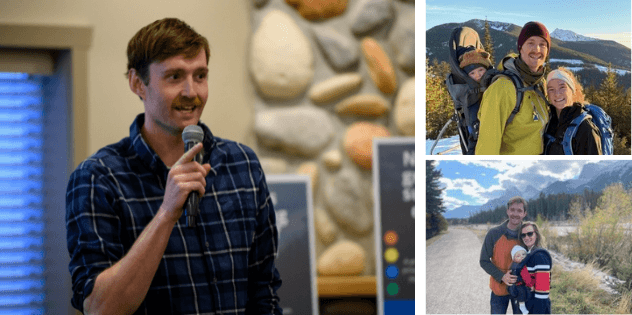
The new physician lead for the Rural Outreach in Critical Care and Internal Medicine (ROCCi) pathway thinks that there is a lot of untapped potential in the support his team can provide.
Dr. Alex Mezei said more rural physicians could use the general internal medicine support through the Real-Time Virtual Support program, but they may not even realize it’s available. “The Critical Care side is, often, what gets the headlines and what a lot of people call for,” he said. “But I think the general internal medicine side of it is actually, almost, the more important stuff.”
Alex has been leading the ROCCi pathway since February, taking over from Dr. Scot Mountain.
The pathway, one of five Instant Access pathways administered by the Rural Coordination Centre of BC, has experienced steady growth since it was launched to provide daytime support (8am to 9pm seven days a week) back in October 2024.
Alex thinks people are so used to dealing with complex patients on their own that they don’t realize they can get help.
What’s more, Alex thinks that if people were able to access support for complex chronic disease through ROCCi, it could prevent some of the scary cases that turn into critical care calls.
““We can help people before they get really sick and sometimes prevent them turning into those big, scary cases.””
One recent example of when ROCCi made a difference happened in a community north of Prince George. The rural physician, whose name and community is not being shared to protect the identity of the patient, called because of a complicated heart issue.
The patient had been diagnosed with critically severe aortic stenosis with new onset angina. They also had an unusually wide pulse pressure.
After calling cardiology in Vancouver and not getting an immediate response, the physician called ROCCi.
She said ROCCi was immediately available and helped guide her and reassure her that her plan for the patient was the right approach.
It was a huge relief.
“You just need confidence in your management plan when it’s something new,” the provider said. “Especially in rural, the volume is variable, so you can go years without seeing something, even though it might be common in a higher volume site.”
“"RTVS can help give confidence and provide safer care. I feel like it really addresses the equity and the equanimity. It can allow for better care in rural communities, where, often, there's no specialists, and difficulty accessing care. It helps us make sure that our rural patients are getting good care, and that we're providing good care.””
All ROCCi physicians are trained in Internal Medicine and Critical Care and are available over Zoom or by phone. They can help carry out:
- internal medicine assessment;
- assessment and stabilization of critically ill patients; and
- procedures that are less familiar to rural providers.
The ROCCi physicians can also act as a second set of eyes and help navigate the healthcare system, including patient transfer.
“The skill set of the ROCCi doc is powerful,” said Alex. “We are able to provide a lot of value in places like Trail [where Alex works] or other mid-sized centres in the province. But there’s a ton of people who just don’t have access to that, and we can kind of play the role of what multiple specialists would do in the city and provide really good care.
“I think one of the powers of ROCCi is that we can take what’s happening in some places already in the province … and extend that reach to places that don’t have it.”
Alex did not set out to become an internal medicine and ICU doctor, rather, his interests and work led him to this position. He studied economics and international relations before eventually deciding to do medical school.
“I’ve always been a social scientist at heart, so I’ve always been interested in, how we can use all the technology we have and expand that to people who aren’t accessing it,” he explained.
After medical school, residency and fellowship at UBC, Alex decided to do a tropical medicine diploma at the London School of Hygiene and Tropical Medicine. He spent the final year of his fellowship doing research, education and clinical work in an ICU at the University Teaching Hospital of Butare (CHUB) in Huye, Rwanda. He remains involved in sepsis quality improvement work there.
Throughout his training, he has engaged in health research focused on expanding access to care in low- and middle-income countries, with projects addressing critical illness, HIV, tuberculosis, cervical cancer, and respiratory syncytial virus (RSV).
“I was doing a lot of international health-type work. But then as my career and life has changed, I've wanted to find ways to kind of solve the same problems in our own backyard, so to speak.”
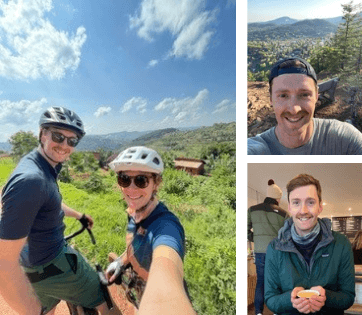
Alex and his wife had spent some time in Trail during Alex’s fourth year of residency, and they fell in love.
They ended up deciding to move to Rossland, about a 15-minute drive from Trail, as a place to live and start a family.
Being able to be part of ROCCi has been a nice way for Alex to stay connected to some of the health equity work that he previously took part in.
“I feel like I’ve been gifted this amazing opportunity that a lot of other people laid most of the groundwork for. It’s a very powerful service already, and I think it has the potential to do a lot, so it’s cool to get to the opportunity to work in this space,” he said.
ROCCi is part of a suite of integrated clinical support, including four other Instant Access pathways, 11 Quick Reply specialists and the Consultation to Conversation program.