

When physicians in rural and remote communities gather to learn together, the impact stretches far beyond the learning environment.
The 2024/25 Annual Report demonstrates how the Rural Continuing Medical Education (RCME) Community Program and Rural Programs Liaisons (RPL) are strengthening connections, building local capacity, and supporting physicians across British Columbia.
“The RCME Community Program has been a pillar for rural physicians — not just for learning, but for connection, retention, and revitalizing the sense of community in medicine. The team helps to brings education closer to home, and with it, support and sustainability for rural practice.”
Local learning, local impact
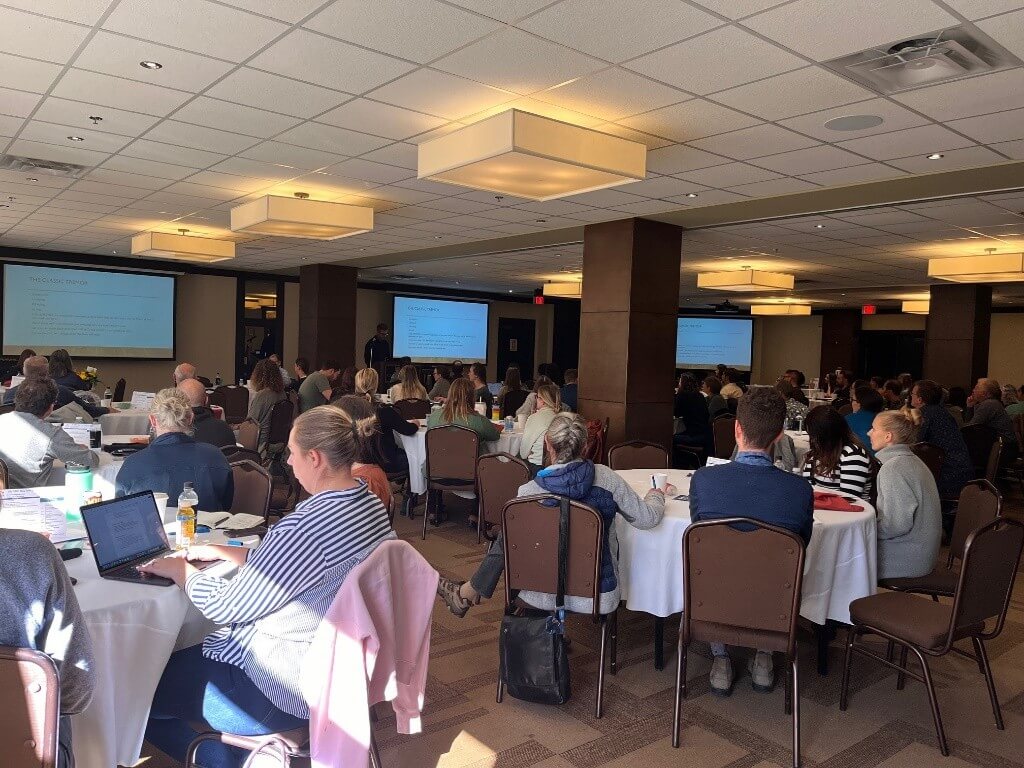
From hands-on skills training to community-led educational events, this year’s report shows the breadth and creativity of Continuing Medical Education (CME) initiatives taking place across rural BC. Communities have designed learning opportunities that reflect their own unique needs, from advanced emergency skills workshops to sessions exploring cultural safety in practice. These activities don’t just enhance knowledge, they also foster collaboration among local physicians, specialists, and other rural health providers.


The role of Rural Program Liaisons
A central feature of the program is the support provided by Rural Program Liaisons (RPL), who act as bridges between communities, physicians and their access to Rural Incentive programs offered in British Columbia. This year, the report highlights how RPLs have helped streamline processes, supported local planning committees, and encouraged innovation. Their work ensures that physicians are receiving the rural incentives they are entitled to and coordinates having travel approved for itinerant physician services in remote communities through the Northern and Isolation Travel Assistance Outreach Program (NITAOP). This program provides funding for approved physicians who visit eligible rural and isolated communities to provide medical services that are not available locally.
Growth and collaboration across BC
Across all health authorities, communities are finding meaningful ways to use RCME funding to strengthen rural practice:
- Northern Health (NHA): In Fort St. James, RCME funds supported a trauma and emergency care workshop that brought physicians, nurses, and first responders together. The training not only improved clinical skills but also reinforced team-based approaches to handling critical incidents in a resource-limited setting.
- Interior Health (IH): Creston physicians collaborated with colleagues from neighbouring communities to host a cultural safety and humility session focused on Indigenous health. The event created space for dialogue, self-reflection, and practice change, highlighting how CME can extend beyond clinical knowledge into relationship-building and equity.
- Island Health (IH): Port Hardy leveraged RCME funding to expand access to point-of-care ultrasound (POCUS) training. This hands-on learning opportunity is already changing practice by enabling quicker, more confident bedside assessments in emergency and primary care settings.
- Vancouver Coastal Health (VCH): Powell River hosted a multi-community CME event that brought together physicians from surrounding coastal communities. By combining education with networking, the session helped build stronger peer-to-peer support systems across geographically dispersed sites.
- Fraser Health (FH): In Hope, local physicians coordinated a simulation-based CME day to prepare for complex emergencies such as cardiac arrests and pediatric trauma. The event, which included allied health staff, strengthened interprofessional teamwork while reducing the professional isolation often felt in small communities.
- Nisgaʼa Valley Health (NVHA): In Gitlax̱t’aamiks (New Aiyansh), The CARE Course was brought in community for the first time in 2023-24. Since then, NVHA is planning a skills-based course such as POCUS or Difficult Airway for 2025-26.
These examples illustrate how RCME is not just about courses or credits. It’s about building confidence, deepening collaboration, and ensuring that rural physicians have access to learning that directly impacts patient care.


Looking ahead
The 2024/25 report not only celebrates what has been achieved but also points toward the future. Continued emphasis will be placed on cultural safety, equity of access to CME, NITAOP planning, and opportunities that support physician wellness. As the program evolves, the foundation remains the same: empowering rural physicians to drive their own learning and ensuring communities have the tools they need to thrive.
The RCME Community Program and Rural Programs’ Liaisons is a partnership between UBC Rural CPD, Rural Education Action Plan (REAP), Island Health, Northern Health, Interior Health, Coastal Health, Fraser Health, and the Nisga’a Valley Health.
Our initiatives remain generously supported by the Joint Standing Committee on Rural Issues (JSC), a Joint Committee of the Doctors of BC and BC Ministry of Health.